By Patsy's Great Friend Faye Morgan
Indianapolis, Indiana
March 6, 1963 :
One of the darkest days in country music history
When my clock radio came
on Wednesday morning, March 6, 1963 and I heard the news that Patsy Cline,
Hawkshaw Hawkins, Cowboy Copas, and Cowboy's son-in-law Randy Hughes, who
was also Patsy's manager and lead guitarist, died in that plane crash, no
words can describe my shock. It was hard to imagine I'd never see them or
hear their wonderful voices again.
Because of my work in music promotion,
I had become friends with Hawkshaw and his wife Jean Shepard; Cowboy, his
wife Lucille and their daughter Kathy (married to Randy Hughes); and Patsy
Cline and her husband Charlie Dick.
I jumped to the phone and started calling those close to
Patsy: Loretta Lynn and Dottie West. I thought of little Brenda Lee,
but remembered she was overseas on a tour.
When Loretta and her husband Mooney came to Nashville in
1961, they lived with us. In those days, country music folks were like
one big family. We
saw everyone at the Opry, church, grocery store, filling station, and on the
road.
Loretta and Dottie's phones were busy. They
were trying to call me. I finally got through, and all of us were just in
total shock. I was so distraught, I could hardly speak or think. When you
lose friends such as these, it's like losing kin.
We were concerned for Patsy and Charlie's kids, Julie and
Randy, and about Jean, who was expecting her and Hawk's second child in a
matter of weeks. Loretta and Dottie were getting in touch with Charlie.
Loretta said, "Faye, call Jean since you're closer to where they live."
When I finally contacted Jean, she was terribly distressed but said she
was holding up. I told her I would come over. She said some people were
already there and she'd call me if she needed anything. My husband and I
went over later.
I knew Cowboy and Randy only from talking to them at the
Opry. However, Hawk and Jean were friends. We'd known him since before they
married. He and my husband raced cars at Marty Robbins' racetrack near
Smyrna, TN. Hawk kept his race car, "The Tennessee Stud," in our garage. He
was always over and never failed to bring eggs from his farm.
I reflected on the close friendship Patsy, Dottie,
Loretta, Brenda, and I had with Patsy - those memorable "hen parties" we'd
have at Patsy's as we cooked, gossiped, and talked about the business.
There had been many, many nights we'd be together between shows at the Opry
at Tootsie's Orchid Lounge [on lower Broadway, with a special second-floor
entrance across the alley from the Ryman].
It was always laughs, just us bunch of women, talking
like sisters about our husbands, kids, problems. The friendship and fun
we shared with Patsy would now be gone. Patsy's heart, home, and pocketbook
were always open to those in need.
Oh, how I would miss her and her devilish
sense of humor. She was riding high, becoming an across-the-boards star. I
couldn't help but think that just when the best of her life had begun, it
ended.
The services for Hawk, Cowboy, and Randy where mobbed. It
was impossible to get anywhere near the funeral home. My last goodbye to my
friends was as their funeral processions went by our home and we stood
silently on the porch. They were the longest processions I'd ever witnessed.
We didn't get to say a real goodbye to Patsy, because her body was flown
home to Winchester.
These precious loved ones were laid to rest, but the
memories of each never were. It's been 40 years. I can't remember everything
that's happened in my life. But from time to time, thoughts still come back
about those good times we use to share.
They are lingering more today than usual and are
as vivid and big-as-life as ever. I'm so thankful for those fond memories
and the deep kinship we so treasured.
September 5, 2003
|
|
She
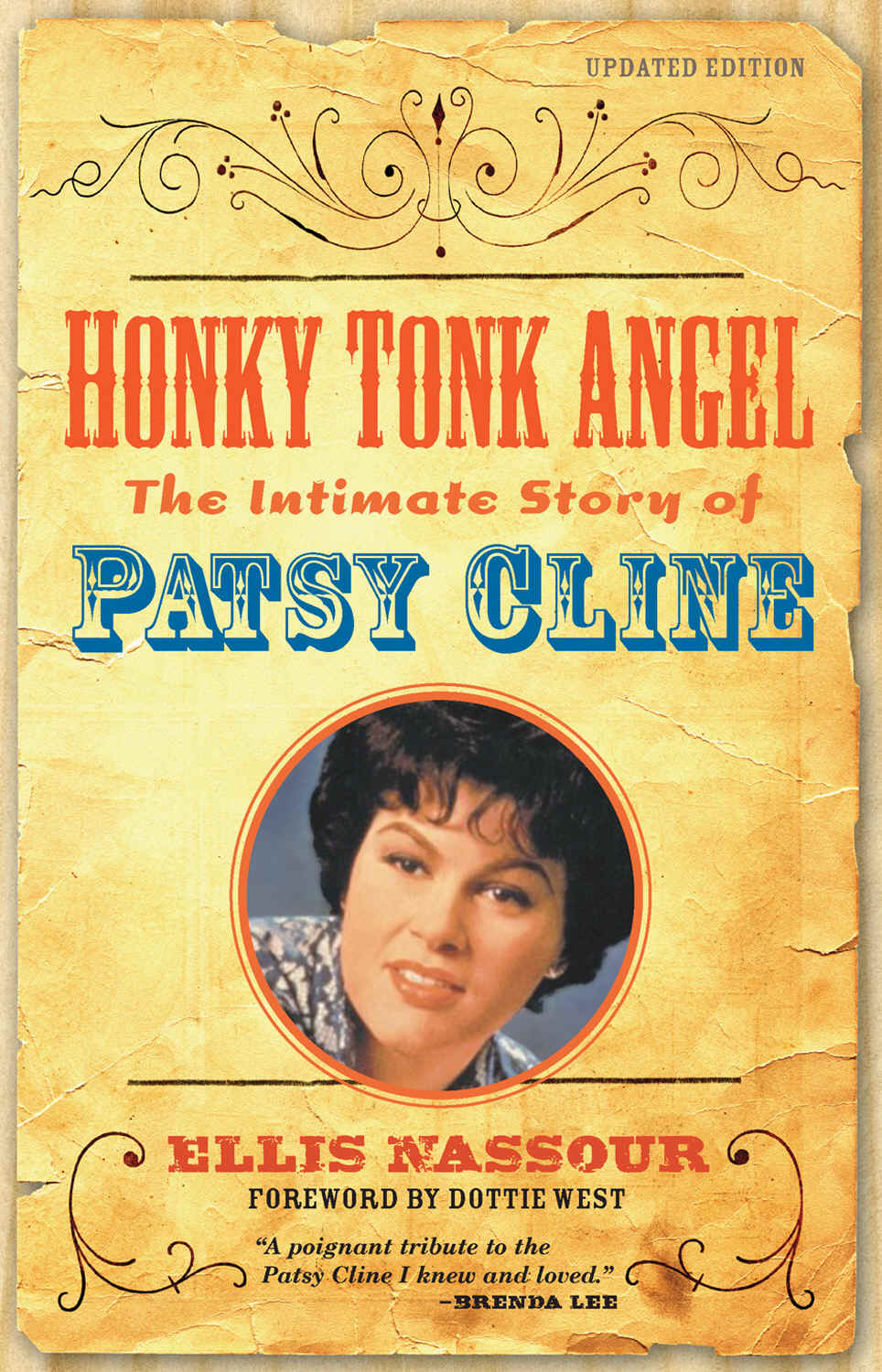
was an original. Tempestuous. Tormented. Talented. A trail blazer.
Triumphant even in defeat. Patsy Cline was one of a kind.
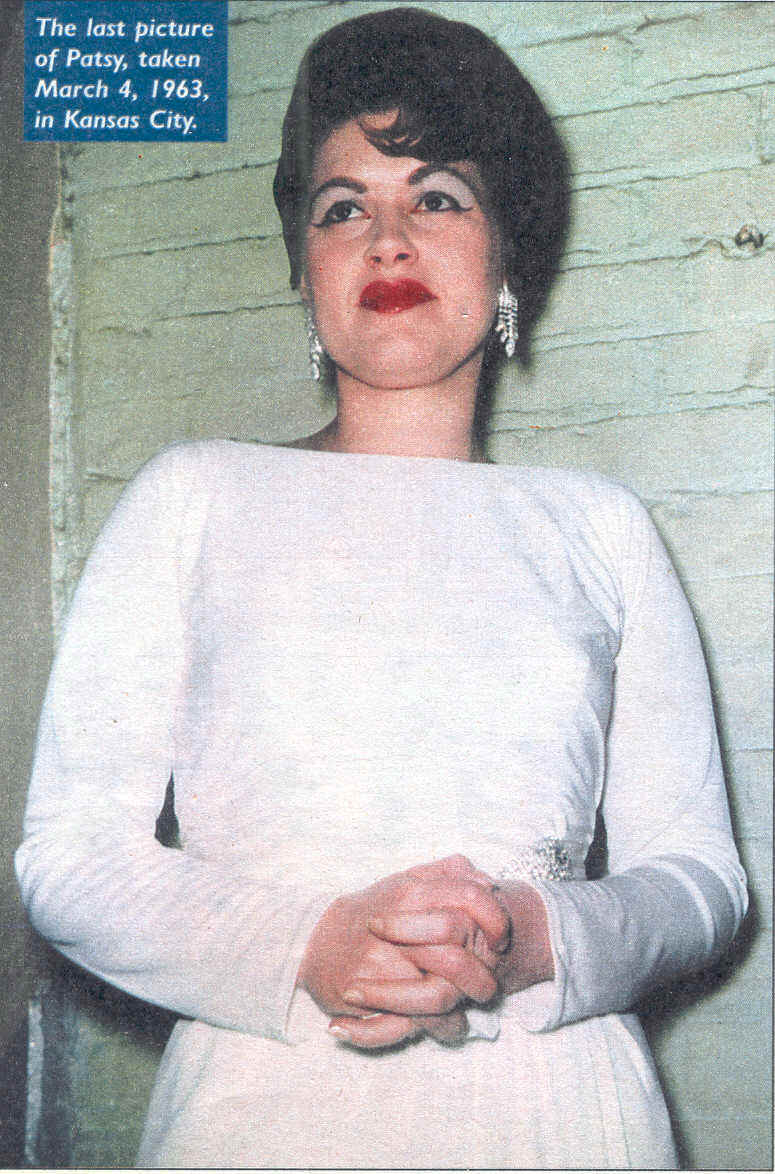
Sadly, just when the best of her life began, it ended:
March 5, 1963, when on the journey home to Tennessee, after performing at a
benefit, she, her manager Randy Hughes and Grand Ole Opry stars Hawkshaw
Hawkins and Cowboy Copas were killed just outside Camden, TN, in the crash
of Hughes' four-seater airplane.
For18 years after her death, following the impact of such a great
loss to country music and the entertainment world, virtually nothing was
written of this unique personality. Now, Patsy has become more famous in death than she
was during her lifetime. It seems, the world cannot get enough.
Equipped with little more than raw ambition and talent,
Patsy, from her early days in Winchester, VA, and Brunswick, MD, struggled
to make a name for herself. As sweet
as her music could be, her personal life was as passionate as it was
reckless.
Though she died shortly after
turning 30, Patsy left behind a rich personal and musical legacy. She has
developed cult followings around the world, especially among young fans who
are mesmerized by the hurt in her stunning voice.
Born Virginia Patterson Hensley in Gore, Virginia, a
hamlet near Win chester, in what is called Apple Blossom Country, she
possessed from the earliest age a self-assurance that made her believe not
only that she could be the best female singer in country music but also that
she was. Nothing could daunt her. A saying sprang up about Patsy: "She's not
conceited, she's con- vinced."
Her mother, Hilda
Hensley, who was also Patsy's best friend, told me she had no idea where
Patsy got her talent, that it must have been in her blood. She never had a
lesson, but from age eight, when she began singing on street corners and in
her church choir, she had the most incredible voice.
Patsy had aspirations of being the youngest star ever on
Nashville's Grand Ole Opry. She told anyone who'd listen and sang anywhere
they would let her. Of course, the kids at school made fun of her dreams;
which made her all the more determined. And she her dream almost came true
when, at age 14, she auditioned for the Opry. It was a lost opportunity for
many reasons, but Patsy returned home more determined than ever.
So determined, in
fact, that she made some costly mistakes, such as allow- ing the older
bandleader she worked for (and with whom she was having an affair) to sign
her to a self-defeating record deal in the late 1950s. Then, in the
male-dominated country arena of that era, she had to constantly struggle to
be accepted as a solo female artist. But fight she did, and she won the
battle.
Through a national
television show, which showcased the talents of budding professionals and
amateurs, she won "overnight" stardom with her rendition of "Walkin' After
Midnight," a song she absolutely hated and which she was forced to sing - a
pattern that recurred through- out her career. The next time she arrived in Nashville, she came as a star, with a hit which
was soaring to the top of the country and, in a first for a country female,
the pop trade charts. Unfortunately, that was followed by nearly four dry
years.
If Patsy could not lay claim to
birthing what came to be known as the Nashville Sound, she brought it out of
diapers. Not always willingly.
She loved pop and
rock music, but preferred to record only country - the hillbilly kind. It
took producer Owen Bradley to get her on track. This he did brilliantly in
record session after record session, where he broke taboos by adding strings
and drums to her tracks. He also tried emerging songwriters, such as Harlan
Howard, Hank Cochran and Willie Nelson and, with his background as a big
bandleader, introduced Patsy to songs from the 1920s and 1930s, which they
redid to amazing contemporary effect.
On the tour
circuit, thanks to numerous appearan- ces on TV, Patsy proved a country
female artist could draw huge audiences. In today's music world, where just
about anything is accepted as melody and where lines are easily crossed or
merged, it'is hard to imagine the extreme impact that Patsy and Bradley had
on the period. Then, you were country (which usually meant hillbilly), rock
or pop.
Patsy changed all
that, and was equally at home with recordings that struck a unique balance
between being moderately pop and country. Interestingly, she didn't do this willingly. One must credit Decca producer Owen Bradley as the genius behind Patsy's
unique voice. He pushed her -- sometimes screaming
and fighting! -- into uncharted territories. Patsy did not want to sing ballads and she absolutely did not want to be
per- ceived as a "pop star."
Country music was her thing. Even with the massive success she had on the crossover charts, she begrudged
the fact that she was having to record pop music. Vocally, she had a
majesty and poignancy that many say has never been equaled. She could
produce sweep ing high notes and Western yodels; and had the amazing
dexterity to switch from a country hoe-down to vintage Irving Berlin or Cole
Porter.
As tribute
to her incredible popularity and artistry, in 1973, Patsy was the first solo
female artist named to the Country Music Hall of Fame. She left behind one
of the greatest legacies in music history, a legacy honored with a 1995
Grammy Award for Lifetime Achievement. In 1999, Patsy was honored with a
star on the Holly- wood Walk of Fame.
She
influenced a legion of performers, including Kay Star, Patti Page, Brenda
Lee, Linda Ronstadt, Emmylou Harris, Barbara Mandrell, Dottie West and, as
evidenced by her enormous hold over k.d. lang and Leeann Rimes, is still having an
impact. So much so that, in July 1997, People Magazine named her to
their list of The Most Intriguing People of the Century.
Patsy took
her crossover appeal to New York's Carnegie Hall, Las Vegas and Los Angeles'
Hollywood Bowl, even to the television teen dance show Dick Clark's American
Bandstand. She won countless music awards with such landmark hits as "I Fall to
Pieces," "Crazy," "She's Got
You," "Back in Baby's Arms," "That's How A Heartache Begins," "Why Can't He
Be You?" and "Faded Love."
Ironically,
though she brought happiness to millions, she had a difficult time finding
it in her personal life. Though she and second husband Charlie Dick were
deeply in love, as her fame increased they constantly made recriminations
against each other. To make matter worse, Patsy was terribly scarred in a
near- fatal automobile crash in the summer of 1961 that plagued her with
bouts of depression and, she felt, drove Charlie further away from her.
Just
as Patsy re-established her place on the charts with "She's Got You" and was
contemplating a break from Charlie, fate intervened.
Only three
albums were released in her lifetime,
but there were great songs from a session only a month before her death.
These have been repackaged in all manner of ways throughout the world.
Patsy
Cline's Greatest Hits continues on the Billboard
album charts. "Crazy" is the Number One worldwide jukebox champion.
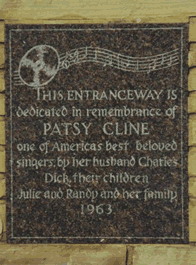
Outside Winchester, VA, her simple gravesite
is marked with a bronze plaque that reads: Death cannot kill what never
dies. love. And, certainly, Patsy Cline is alive to all of us because of her
indelible gift of music. |